Lawn Watering Tips
Ever wondered how often you should be watering your lawn? Check out our lawn watering tips below

Ever wondered how often you should be watering your lawn? Check out our lawn watering tips below
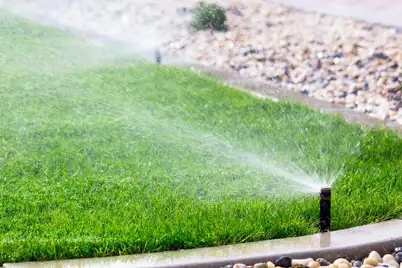
It's best to water your lawn in the early morning, before 10am. This not only helps to prepare the lawn for the day ahead, but allows the lawn leaves to dry off during the day. Watering at night leads to lawn leaves staying wet for many hours, which can promote the development of fungal diseases.
Give your lawn longer, deeply penetrating watering that wets the soil to a considerable depth. This encourages deeper rooting and results in a more vigorous, higher quality turf. To see how deep you have watered, use a shovel to slice down into the soil to see how far the water has penetrated. You won't need to do this repeatedly once you get the hang of watering.
Short frequent waterings throughout hot weather can promote shallow rooting of the lawn. This leads to poor access to water and nutrients, making the lawn more susceptible to weed invasion, fungal diseases and pest damage. It is best to water thoroughly 1-3 times a week, depending on the grass and soil type, location and weather.
After thorough watering if the soil under the lawn is not uniformly wet, your lawn is likely suffering from hydrophobicity. This is where a water repellent layer forms on the soil, making it very difficult to wet effectively. This water repellency can be resolved by applying a soil wetting agent like Munns Professional Smart Wetter or Yates Waterwise Soil Wetter hose-on.
Yes, greywater can be used on the lawn. Greywater is better used on your lawn than other plants, as it is not as sensitive to some of the chemicals in greywater. For best results, move greywater hoses around different areas of the lawn.
There are many ways to save on water usage on your lawn.
Treat weeds, which compete for moisture, with a spot spray like Yates Weedkiller for Lawns Spot Spray or a hose-on like Yates Weed'n'Feed Buffalo Lawn.
A healthy lawn with a deep root system is less likely to suffer from moisture stress. Apply Munns Professional Root Regenerator to develop deeper lawn roots which are able to reach water deeper in the soil.
Replace your lawn with a type of grass more tolerant of hot and dry conditions like Munns Professional Couch or Munns Professional Kikuyu
Raise the mowing height for your lawn. An increase in mowing height encourages a deeper root system, the longer leaf also creates better shading of the soil which helps to reduce evaporation.
Install a rain gauge or a weather app to track past and future rain.
Check for lawn pests as their damage to the lawn roots can appear as a dry lawn. Pests such as African Black Beetle may damage your lawn's roots in Spring.
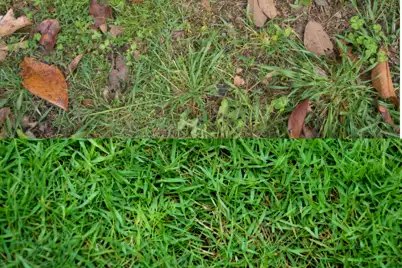
Hydrophobic (water repellent) soils can be very common and may develop after hot weather or periods of low rainfall. If an area is patchy compared to the rest of your lawn, water this area thoroughly, dig a hole, if it stays dry you need to apply a wetting agent like Munns Professional Smart Wetter.
A newly planted lawn will take up to 12 months before it has established a deep enough root system to achieve its maximum drought tolerance. Therefore, your lawn will require more watering during its first summer to enable it to develop to the fullest drought tolerant potential.
The amount of water required depends on:
• Soil type
• Wind
• Temperatures
Keeping the top 5cm moist at all times is the best way to achieve good germination. This generally requires 4 waterings per day if no rain, with a fine hose attachment so you don't wash the seed away or into clumps, keeping the top 2cm moist at all times.
Guide on how to maintain a lawn sown by seed
Guide on how to maintain a lawn sown by seed