
Grow
Nuts Trees

‘I had a little nut tree!’ goes the old children’s rhyme. And every garden can have a nut tree because there’s a variety to suit just about every site and climate.
Macadamias
While the Australian native nut, the macadamia, is renowned for its hard shell, macadamia nuts taste so delicious it’s worth the effort required to crack them.
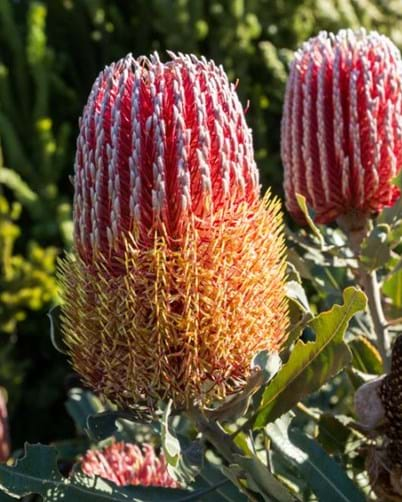
Macadamias have attractive pink or white spikes of flowers (pictured) that dangle from the inner branches of the tree. Macadamias are related to banksias and grevilleas and, like these other members of the Proteaceae family, are sensitive to phosphorus. This means they should always be fed with a special native plant fertiliser such as Garden Gold for Natives.
Macadamias are rainforest understorey trees that will grow happily either in light shade or full sun. You can help the plants to make the most of any available water by mulching heavily over the root area with a ten-centimetre-thick layer of organic mulch and by applying Yates Waterwise Soil Wetters (either dry or liquid) every six months. Soil wetters encourage water to move into the root zone.
Macadamias are surprisingly cold tolerant and can adapt to handle a few degrees of frost.
Buy a grafted, named variety of macadamia if possible. This not only guarantees the quality of the nuts, but ensures that the tree fruits within a few years. Seedling trees can take much longer to reach cropping stage.
Almonds, walnuts and pecans
Almonds prefer Mediterranean conditions with warm dry summers and winter rains. They can handle cold winters, but frost at flowering time will destroy almond blooms.
Two compatible almonds are usually required for pollination. If space is a problem, these days it may be possible to buy a double-grafted tree with two varieties on the one rootstock. Or look for a self-fertile variety such as All In One.
Although it’s reasonably drought hardy, the almond shares the macadamia’s need for soil moisture when the nuts are forming. Hence the same recommendations for mulching and soil wetter apply.
Walnuts and pecans grow into very large trees that are ideal for country estates in cool, reasonably moist climates. Their ultimate size makes them too large for most suburban gardens.
Peanuts
Peanuts are fascinating plants that will crop in areas that have at least five months of warm weather. Yates Garden Guide has simple instructions for growing peanuts. Start by sowing raw (not roasted) peanuts into well- drained soil. Sprinkle Thrive Granular All Purpose plant food and some extra superphosphate beside the rows. Mulch well to retain moisture and feed the plants by regularly watering with soluble Thrive or Aquasol.
After the peanut plants have flowered the stalk will bend over to develop the ‘nut’ underground. Harvest after the plant yellows at the end of the season.
Growing peanuts is a great kids’ activity but make sure that none of the participants is affected by a peanut allergy!


Comments (5)
Add a comment
This area is for general comments from the Yates Garden Club community. Questions posted here will not receive a reply from Yates. For specific gardening advice visit Ask an Expert
Donna
Yates site member
15:42, 30 September 2009
good information thanks
Donna
Yates site member
15:43, 30 September 2009
thanks
Giuseppe
Yates site member
11:33, 11 January 2010
I always wanted to know how to grow peanuts now I know it was worth to join in the YATES CLUB. Thanks so much TomatoJoe48
Elizabeth
Yates site member
20:56, 04 September 2011
Do you have to rip up the whole plant to harvest and start all over again? Or can you save the plant some how?
Brendan
Yates site member
15:43, 09 October 2011
Peanuts are an annual plant and will therefore die off once they have set seed. Its best to harvest the peanuts and then reincorporate the plant back into the soil to add nitrogen to the soil for your next crop!
george
Yates site member
09:13, 21 November 2011
IVE ALLWAYS WANTED TO GROW MACADAMIAS SO I BOUGHT 2 GRAFTED TREES IVE PLANTED THEM IN MY FRONT GARDEN NOW ALL I HAVE DO WAIT SO I CAN REEP THE REWARDS I HOPE IM LUCKEY ENOUGH.
Add your reply