
Growing Vegetables
Your own homegrown vegetables taste much better and are fresher than any that you buy in the shops. Fruiting vegetables, like beans, tomatoes, capsicum and sweet corn, have the best flavour if they’re eaten as quickly as possible after harvest; leafy vegetables, such as lettuce, lose water and rapidly become limp, and all vegetables are more nutritious if they are consumed when as fresh as possible.
Growing your own can save a considerable amount on food costs and will also give you a wider choice of vegetables.Unusual vegetables are often difficult to buy in shops, but are easily grown in the home garden. Lots of vegetables are ornamental so can be grown for their good looks as well as their produce.
When to grow vegies
Vegetables can be loosely grouped according to their growing season.
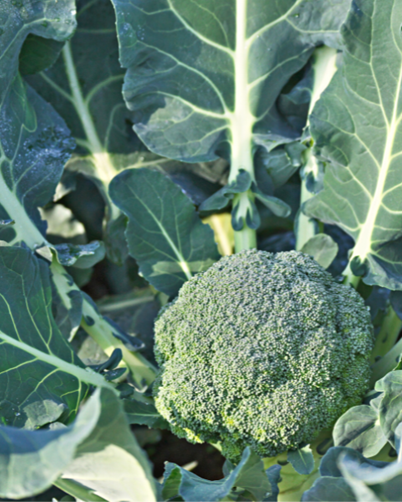
Cool Season Vegetables: Grow best when temperatures are between 10-20 degrees C or even lower. They include: broad beans, broccoli, Brussels sprouts, cauliflower, onions, peas, spinach and turnips.
Intermediate Season Vegetables: These are best between temperatures of 15-25 degrees. Include: beetroot, carrot, parsnip, celery, leek, lettuce, radish, silver beet.
Warm Season vegetables: Are grown best when temperatures are above 20 degrees C. Include: Beans, capsicum, eggplant, potato, sweet corn, sweet potato, tomato and cucurbits (including cucumbers, zucchini, pumpkins etc.)
Vegetable Cultivation
Position- Vegetables must have sun! Try to select a growing area that is sunny for most of the day, is sheltered, and is close to a source of water.
Soil – Soil is often the easiest thing to adjust to your growing needs. In fact, strictly speaking, soil is not absolutely necessary. Vegetables can be grown in potting mix or in a hydroponic set up, but the most common medium is still good garden soil. Soil must have good drainage and a good structure. Regular incorporation of old organic matter (such as compost) will keep the soil functioning well.
Nutrients – Vegetables, more than most other plants, need to be supplied with adequate nutrients.
Mineral fertilisers: are reliable sources of good quantities of nutrients. Mixes with a balanced NPK ratio are suited to a wide range of crops. Balanced, all-purpose fertilisers, such as Thrive All Purpose, can be mixed into the soil before planting. Soluble fertilisers, such as Thrive or Aquasol, can be applied in liquid form to plants during their early growth stage. Additional dressings of Sulphate of Potash and Superphosphate may be necessary, especially for fruiting and root crops.
Organic Fertilisers: are derived from once-living material. They’re excellent for improving soil, but their nutrient levels can be very variable. In recent years, however, increased interest in these products has led to many improvements, with fertilisers such as Dynamic Lifter organic pellets now having guaranteed nutrient levels.
pH
pH is the level of acidity or alkalinity in the soil. Most vegetables produce best results if grown at a soil pH level of 6.0 to 7.0. In some areas this may mean adding lime before planting. Checking the pH level of the soil is recommended.
Mulching
Mulching over plants’ root systems, preferably with an organic mulch, will retain moisture, suppress weeds, reduce temperature fluctuations, and prevent soil crusting.
Watering
Water thoroughly so that the entire root system of the plant is moistened. Thorough waterings are more effective than light sprinklings. Don’t allow plants to reach wilting point but, conversely, don’t flood them as this washes away nutrients and may cause drainage problems. Soil wetters such as Yates Waterwise soil wetter and moisture holders such as Yates Waterwise storage crystals, can be helpful.
Crop Rotation
It’s important to avoid growing successive crops of the same type of vegetable in the same spot in the garden. This practice, which is called crop rotation, helps prevent build up of soil diseases. Seasonal crop changes often lead to natural crop rotation.
Favourite Vegies
- Beans – Available in dwarf or climbing forms, beans produce pods that are sliced or eaten whole. They must be grown during the warm season. Origin: Tropical America. Nutrition Value: Vitamin C, Vitamin A (beta carotene), iron, fibre and some protein.
- Beetroot- The deep crimson swollen root of beetroot is cooked in stews and soups or cooled for salads. Its leaves can also be used as a vegetable. Origin: Southern Europe. Nutrition Value: Excellent source of folate.
- Brassicas (cabbages, cauliflower, broccoli, Brussels sprouts) All grow better when temperatures are not too hot or too cold although new varieties are more heat tolerant. The introduction of Chinese cabbages and other oriental brassicas has encouraged new culinary uses for this group of vegies. Origin: Europe and Asia. Nutrition Value: Vitamin A, Vitamin C, mineral salts, fibre, protein.
- Broad Beans- Grow on upright bushes during the cooler time of year. The whole pod can be eaten when young or (more commonly) the seeds are removed and cooked. Origin: Prehistoric Europe and ancient Egypt Nutrition Value: High in carbohydrates, fibre, minerals, Vitamin A and Vitamin C
- Carrot – A root vegetable that is traditionally bright orange in colour. Must be grown in well-drained, friable soil that is free of stones, fresh manure or fertiliser. Origin: Europe. Nutrition Value: Potassium, carotene (Vitamin A), Vitamin C and fibre.
- Cucurbits- Includes vine plants such as pumpkin, cucumber, zucchini, melons. They must grow during warm season and almost all have separate male and female flowers. Only the females produce fruit. Origin: Tropical America and the Orient. Nutrition Value: Vitamin C, minerals and fibre.
- Lettuce- The most popular salad plant in the world, lettuce is grown for its crisp green leaves. Butterhead lettuce has soft, buttery leaves; crisphead or iceberg have firm, solid hearts; cos has upright, loose leaves. Origin: Mediterranean. Nutrition Value: Carotene (Vitamin A), Vitamin C, fibre.
- Onions- Onions are bulbs with a pungent flavour. The bulb develops in response to day length and correct sowing times are critical for onions. Origin: Central and Western Asia. Nutrition Value: Vitamin C, calcium.
- Peas- The pea is a legume that is grown for its pods or for the seeds they contain. For many centuries peas were eaten only in their dried form but the fresh pea has a sweet, pleasant flavour. Available in dwarf or climbing forms. Origin: Asia and North Africa. Nutrition Value: Protein, fibre, Vitamin A, Vitamin C, mineral salts. One of the most nutritious vegetables.
- Potatoes- The underground tuber of a warm season plant that is now one of the world’s staple foods. Easily grown in the home garden but needs plenty of room. Origin: South America. Nutrition Value: Protein, Vitamin C, carbohydrate and fibre
- Sweet Corn – A warm season cereal that is grown for its sweetly flavoured seeds, sweet corn grows on a tall plant. The seeds must be pollinated by pollen falling from the tassel at the top of the plant. Origin: South America. Nutrition Value: Vitamin C, fibre, minerals and protein.
- Tomatoes – A warm season fruiting vegetable that is popular both in salads and cooked dishes. Fresh tomatoes are best eaten at room temperature. Origin: South and Central America. Nutrition Value: Vitamin A, Vitamin C, fibre and protein.

Comments (17)
Add a comment
mainu
Yates site member
19:36, 30 October 2009
nice
Nafeesa
Yates site member
14:44, 05 November 2009
I realy like it!
Nafeesa
Yates site member
14:47, 05 November 2009
I want to Grow green chillies in my garden can u please tell me how can i grow them and what i have to do first, like in sun area or which on will the best time to grow them thanks!
Lorraine
Yates site member
16:18, 07 November 2009
I have both a great garden of Aussie Natives and a huge array of veg = all treated with Yates Products = my granny allways used Yates products so they have been around for a long time.
tahlia
Yates site member
13:52, 13 November 2009
heey great work, so helpful. xx ily.
Jennifer
Yates site member
12:40, 17 November 2009
I am growing cucumber, brocolli, silverbeet and some other vegies. The above mentioned vegies leaves all have holes in them. Can you help with what the problem is and the best way to treat them
tanya
Yates site member
17:33, 01 December 2009
having trouble getting the capsicums to full size, they seem to either shrivel up or get a "sunburn" spot on them and go limp. Tree is older now and in full sun. Any hints?
Peter
Yates site member
15:38, 13 December 2009
Last year I made a new veg garden and used soil from my chook yard which had a lot of mamure in it.everything I planted includin seeds struggled to grow or produce flowers.Even zichini's struggled and the fruit only grew a bit and then rotted,beans struggled and harvest was poor,seed germination also was poor.A similar thing has happened again this year with a very poor crop of Broad Beans.Both years the only thing which produced reasonably were Tomatoes which were only fair.Is the soil too rich? I look forward to your advise. Kind regards, Peter Adams.
kevin
Yates site member
19:22, 06 January 2010
Peter i feel from your comments that your soil may be too light and the water drains away too quickly. If you feel I am right try adding some ordinary garden soil. I had this peoblem myself, my plants were just sitting and not growing so i added some clay loam and bingo i am now picking produce.
edward
Yates site member
11:27, 31 December 2009
Peter,you should buy a soil testing kit, your acidity may be too high,you may need to treat it with agricultural lime.
ian
Yates site member
10:14, 04 January 2010
growing capsicums from seed and need to know if they need to be staked like tomato plants they are 40cm in height and flowering.very informative site
Karen
Yates site member
15:10, 04 January 2010
I am growing spagetti squash. How do you know when there ready to be picked. They are the size of a large football. I"ve been told they should be a bright yellow but mine are a dull yellow grey. They are in full sun, plenty of water given to them. Good soil I think. Fertilized by my cows and horse.calling
Yvette
Yates site member
09:14, 07 January 2010
all my vegetables are growing well except my zucchinis and squash. The fruit are dropping off or going soft at the end before they are a pick able size. They are in between corn and tomatoes, the plants are also a good size, pre prepared rich soil with blood and bone & light mulch. ??? before I pull them out plz
margaret
Yates site member
18:12, 14 January 2010
i have a yellow, soft,film in my no dig garden beds. i dont know how t5o get rid of it. It feel soft and stickey to touch
Dermott
Yates site member
14:06, 14 February 2010
wat can you use under the soil to help them grow???
Steve
Yates site member
10:37, 11 March 2010
I Want to grow vegies for a living, but i dont know how, does anyone know how i can start my career? i am looking to get 150k-200k a year.
Steves mum
Yates site member
10:44, 11 March 2010
im looking for something to scare the birds away from my crops im thinking about buying a bigger bird to scare the little birds off? would that work?
Steves dad
Yates site member
10:47, 11 March 2010
My weed doesnt grow as fast as the clients want do you have any tips to make it grow faster. Regards Steves dad.
Add your reply